
Mold Removal in Frisco, TX — Fast, Certified & Guaranteed
Mold spreads fast and hides where you can’t see it. One small leak can become a full infestation within 48 hours. Our IICRC-certified, TDLR-licensed team inspects, contains, removes, and restores — the right way.
- IICRC Certified
- TDLR Licensed
- 24/7 Emergency Response
- Insurance Documentation
mold response
How fast does mold actually spread?
Within 24 to 48 hours of water exposure. In Frisco’s humid summers that window can be even shorter. That’s why fast inspection and containment matter more than any cleaning product.
LicensedState-required license for mold remediation in Texas.
CertifiedTechnicians trained to the industry gold standard.
Why Frisco Homes Are Especially Vulnerable
Fast growth in North Texas comes with a hidden cost. Hot, humid summers, an active storm season, and newer tightly-built homes all create ideal conditions for mold.
- 1Humid summersNorth Texas humidity keeps surfaces damp long after a leak or flood dries on the surface.
- 2Storm seasonHeavy spring rainfall drives water intrusion through roofs, windows, and foundations.
- 3Newer, tighter constructionHomes built quickly to meet demand can trap moisture inside walls and attics.
- 4Slab & pier-and-beam crawlspacesCommon in subdivisions like Phillips Creek Ranch and Panther Creek, these can trap crawlspace moisture with no easy escape.
Local coverage: we see regular mold cases in zip codes 75033, 75034, 75035, and 75036, plus nearby Little Elm, The Colony, and Prosper — especially after spring storms and summer humidity spikes.
Warning Signs You Need Mold Removal
Most homeowners don’t spot mold until it’s already a serious problem. Here’s what to watch, smell, and feel for.
What You See
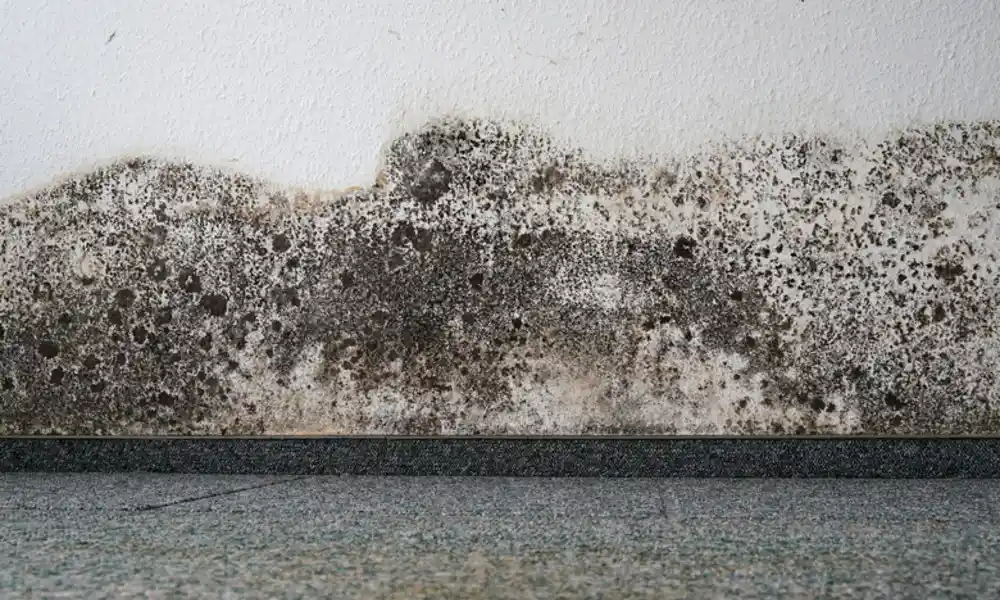
- Dark spots on walls, ceilings, or floors
- Discoloration around windows, vents, or grout
- Peeling paint or bubbling wallpaper
- Black, green, or white fuzzy growth
What You Smell
A musty or earthy odor is one of the earliest signs of mold, often noticeable after rain or when the AC kicks on. That smell won’t go away on its own.
How You Feel
- Chronic coughing or sneezing
- Sinus pressure without a cold
- Fatigue that doesn’t improve with rest
- Symptoms that ease when you leave the home
Situational risk factors: recent water damage or plumbing leaks, storm flooding, indoor humidity above 50%, and poor ventilation in bathrooms, attics, or crawlspaces all create the right conditions for mold to grow fast.
Types of Mold Found in Frisco Homes
Different species behave differently and carry different health risks. Lab testing identifies the exact type in your home.
Black Mold
Stachybotrys chartarum — thrives after prolonged water damage, produces mycotoxins linked to respiratory and neurological symptoms. Always call a professional.
Aspergillus
Grows in HVAC systems, drywall, and insulation. Powdery texture in green, yellow, white, or black. Higher risk for weakened immune systems.
Cladosporium
Olive-green or brown clusters on fabrics, wood, and painted surfaces. Doesn’t need warm temperatures — found in basements and attics.
Penicillium
Blue-green, spreads quickly through water-damaged insulation and carpet with a strong musty odor.
Chaetomium
Cotton-like texture, starts white and turns gray or black. Produces mycotoxins similar to black mold.
Our Mold Removal Process, Step by Step
Mold removal is not just scrubbing a surface. We follow strict protocols set by the IICRC and EPA.
Inspection & testing
Thermal imaging and moisture meters find hidden mold. Air and surface samples go to a certified lab to confirm species and spread.
Containment
Plastic barriers and negative air systems stop mold from spreading. HVAC systems shut down immediately.
Air filtration
HEPA air scrubbers capture spores as small as 0.3 microns, bringing indoor counts down to safe levels.
Removal & disposal
Infested materials are removed only when they can’t be cleaned. Everything is sealed and disposed of per Texas regulations.
Antimicrobial treatment
EPA-registered antifungal treatments kill remaining colonies and help prevent regrowth on every affected surface.
Restoration & repairs
Drywall, paint, flooring — or full structural reconstruction for major cases — return the property to pre-mold condition.
Post-remediation testing
A third-party inspector confirms mold levels are safe and issues a written clearance report for your records or insurer.
Mold Removal Cost in Frisco, TX
Cost depends on square footage, mold type, location, and how much hidden mold turns up during inspection.
| Category | Service | Typical Cost |
|---|---|---|
| Inspection & testing | Basic mold inspection | $200 – $600 |
| Larger properties / complex assessments | Up to $1,000 | |
| Remediation | Most residential projects | $1,500 – $6,000 |
| Average moderate-severity job | Around $3,000 | |
| Severe or large-scale infestations | $10,000+ | |
| Additional | HVAC cleaning after remediation | $300 – $700 |
| Post-remediation testing | $200 – $500 | |
| Containment setup for complex jobs | $500 – $2,000 |
Does insurance cover it? Many Texas policies cover mold that results from a sudden covered event, like a burst pipe — most exclude mold from long-term neglect or gradual leaks. Review your policy and document damage thoroughly.
Always get a free written estimate before any work begins. A reputable company gives upfront pricing with no hidden fees.
Residential Mold Removal
Common spots: bathrooms, under sinks, attics, crawlspaces, behind drywall after leaks, and around poorly sealed windows. We focus on thoroughness and minimal disruption to your family’s routine.
Commercial Mold Removal
Offices, restaurants, warehouses, apartment complexes, and medical offices face higher stakes — lost revenue and liability. We offer after-hours work and documentation for health inspectors and adjusters.
DIY vs. Professional Mold Removal
DIY is only safe for very small, contained, non-porous surfaces. Most Frisco cases go well beyond that.
DIY is okay when…
- The area is fully visible, under 10 sq ft
- Mold is on non-porous material like tile or glass
- The moisture source is already fixed
- You wear an N-95 respirator, gloves, and eye protection
Call a pro when…
- Scrubbing could spread spores into the air or other rooms
- Mold is on porous material bleach can’t fully penetrate
- The HVAC could carry spores through the house
- Mold may be hidden behind walls or under flooring
Texas requires a license: mold remediation companies must hold a TDLR license. Always verify your contractor’s license number before work begins.
Mold Prevention Tips for Frisco Homeowners
The best mold removal is the kind you never need.
Control humidity
Keep indoor humidity below 50% with a dehumidifier. A $20 hygrometer tracks it in real time.
Fix leaks immediately
Check under sinks, around toilets, and behind appliances regularly — don’t assume a small drip is harmless.
Improve ventilation
Run bathroom exhaust fans, vent dryers outside, and keep attic vents clear and unobstructed.
Inspect roof & gutters
Clean gutters twice a year and check for missing shingles after heavy storms.
Maintain your HVAC
Change filters every 1–3 months and clean ducts every 3–5 years, especially after water damage.
Act fast after water damage
Remove standing water within 24 hours and call a professional if drying takes more than 48.
Why Choose Us for Mold Removal in Frisco
Frisco homeowners have options. Here’s what sets certified, licensed remediation apart.
IICRC-Certified Technicians
Trained to the industry gold standard for mold remediation protocols.
TDLR-Licensed in Texas
State-regulated procedures for removal, containment, and disposal.
24/7 Emergency Response
Fast response in the first 24 hours limits spread and total cost.
Insurance Support
Photo documentation and written scopes of work to support your claim.
Check before you hire: a valid TDLR license (verify at tdlr.texas.gov), IICRC certification, liability insurance, a written estimate, and a clear explanation of the full remediation process.
Mold Removal Questions, Answered
Tap a question to see the answer.
How long does mold removal take in Frisco?
Most residential jobs finish in 1 to 3 days. Larger infestations across multiple rooms, attics, or crawlspaces can take up to a week.
Do I need to leave my home during remediation?
For small, contained jobs you can usually stay if unaffected areas stay sealed. For larger infestations, relocating for 1 to 2 days is often recommended.
Does homeowner’s insurance cover mold removal in Texas?
Often yes if the mold resulted from a sudden covered event, like a burst pipe. Mold from gradual leaks or neglect typically isn’t covered.
How do I know if I have black mold?
You can’t identify it by appearance alone — many species look dark. Lab testing of air and surface samples is the only reliable way to confirm.
Can mold come back after professional removal?
Only if the moisture source isn’t fixed. A complete remediation process addresses that source and applies antimicrobial treatment to inhibit regrowth.
What’s the difference between mold removal and remediation?
Removal is just the physical clean-up. Remediation is the full process — inspection, containment, filtration, removal, treatment, restoration, and clearance testing.
How fast can mold spread in a Frisco home?
Colonies can establish within 24 to 48 hours of water exposure, sometimes faster during humid North Texas summers.
Serving Frisco & Nearby Communities
Frisco zip codes 75033, 75034, 75035, and 75036, plus The Colony, Prosper, McKinney, Little Elm, Plano, Celina, and Allen.
Related Water Damage Services
Found Mold in Your Frisco Home? Call Now.
Mold won’t fix itself, and every day it spreads further. Get a free on-site inspection and a written estimate before any work begins.
IICRC-certified · TDLR-licensed · Serving Frisco & North Texas · Open 24 hours, 7 days a week