
Leak Detection & Repair Frisco
A hidden water leak doesn’t announce itself. It works quietly behind walls, under concrete, and beneath flooring — for weeks, sometimes months.
By the time you notice the damage, the leak has already warped your floors, soaked your insulation, and started feeding mold inside your walls. That small drip you ignored last month? It may have wasted over 970 gallons of water.
Frisco homeowners face higher leak risk than most. The city’s expansive clay soil shifts constantly. Homes are built on concrete slabs. Aging copper pipes corrode from within. And fast-growing neighborhoods sometimes hide poor installations behind perfect finishes.
Our licensed plumbers use non-invasive technology to find and fix leaks fast — without tearing apart your home. Call now for same-day leak detection in Frisco, TX.
Why Leak Detection Matters More in Frisco, TX
Frisco is not like most cities. It grows fast. It sits on reactive clay soil. And almost every home in Collin County rests on a concrete slab foundation.
That combination creates a serious and persistent leak risk that homeowners in other regions simply don’t face.
The Clay Soil Problem
Frisco’s soil is dominated by “black gumbo” clay — one of the most reactive soil types in North Texas. This clay expands dramatically when wet and contracts sharply during dry periods. Every rain-drought cycle puts stress on underground pipes. That stress causes joints to shift, pipes to crack, and small pinhole leaks to form beneath your foundation — invisible from above.
Slab Construction Risk
Nearly every Frisco home is built on a concrete slab foundation. Water supply lines and drain pipes run directly beneath that concrete. When a pipe beneath the slab fails, the leak has nowhere to drain. Water either seeps upward through the floor or erodes the soil beneath the foundation. Both outcomes cause serious structural damage if left unaddressed.
Aging Infrastructure in Newer Subdivisions
Frisco grew at an extraordinary pace. Many homes built in the late 1990s and 2000s now have aging copper lines, original fixtures, and plumbing systems installed under pressure to meet rapid development demand. These systems are reaching the end of their service life in some of Frisco’s most desirable neighborhoods — including Stonebriar, Starwood, Panther Creek, and The Grove.
The EPA estimates household leaks waste approximately 1 trillion gallons of water nationwide every year. A single pinhole leak wastes 970 gallons per month. A running toilet wastes up to 200 gallons per day. Frisco homeowners who fix hidden leaks typically see 15 to 30 percent reductions in their monthly water bills.
The takeaway: In Frisco, leaks are a when — not an if. Early detection protects your foundation, your home’s value, and your family’s health.
Warning Signs You Have a Hidden Leak in Frisco
Most leaks stay hidden until they cause real damage. These signs tell you something is wrong before you can see it.
Unexplained Water Bill Spikes
Your water usage hasn’t changed. But your bill jumped $50, $100, or more. That money represents real water going somewhere — into your walls, under your slab, or into the soil beneath your foundation. Don’t dismiss an unusual bill as a meter error. Get an inspection.
Sound of Running Water With No Fixtures On
Stand quietly in your home. Turn off every tap, appliance, and toilet. Do you still hear water running — a faint hiss, rush, or trickling? That sound means pressurized water is escaping somewhere in your plumbing system.
Warm or Hot Spots on Your Floor
Walk barefoot across your tile or hardwood floors. Feel for patches that are noticeably warmer than the surrounding area. This is a classic sign of a hot water line leak beneath the slab. Heated water migrates upward through the concrete and radiates through your flooring. In Frisco’s tile-heavy homes, warm floor spots are often the first detectable slab leak symptom.
Damp, Wet, or Buckling Flooring
Carpet that feels wet without a visible spill. Hardwood that buckles or warps. Tile grout that separates or cracks. These are signs that moisture is coming from below — a strong indicator of under-slab or sub-floor leak activity.
Low or Dropping Water Pressure
A sudden drop in water pressure throughout your home often means water is escaping the supply line before it reaches your fixtures. This is especially common with main line leaks or significant slab leaks.
Mold, Mildew, or Musty Odors
Mold requires moisture and darkness. A hidden leak provides both. If you smell musty air near a wall, baseboard, or floor area — especially without visible water — mold growth from a concealed leak is a likely cause. North Texas humidity accelerates mold growth once a moisture source exists.
Cracks in Walls, Floors, or Foundation
A slab leak adds continuous moisture to Frisco’s reactive clay soil. That soil shifts and moves. The movement causes your foundation to settle unevenly. Watch for new hairline cracks in drywall near baseboards, tile that begins to separate, or doors and windows that stop closing properly.
Wet or Soggy Spots in the Yard
An unexplained wet patch in your yard during dry weather is a red flag. When an underground main line or sewer line cracks, escaping water saturates surrounding soil. In severe cases, the soil above the damaged section erodes away, creating a visible depression or soft spot.
Green Patches of Grass
One section of your lawn stays bright green while the rest dries out in summer heat. An underground leak is feeding that area with a constant water source. Don’t assume good grass is luck.
Types of Leaks We Detect & Repair in Frisco
Leaks hide in many places. Each type requires different detection methods and repair approaches.
Slab Leaks
A slab leak occurs when a water supply or drain line running beneath your concrete foundation cracks, corrodes, or fails. Frisco’s clay soil shifts with every rain and drought cycle. That movement stresses buried pipes until they give.
Slab leaks are the most serious and expensive leak type when left undetected. They cause foundation settling, indoor flooding, mold growth behind walls and under floors, and significant structural damage to your home.
Common causes in Frisco:
- Clay soil expansion and contraction stressing buried pipes
- Corrosion in original copper lines from homes built in the 1980s–2000s
- High water pressure exceeding 80 psi straining pipe joints
- Poor installation during rapid development construction
- Abrasion from pipe movement against concrete over decades
Early detection of a slab leak typically saves $8,000 to $12,000 or more in foundation remediation costs.
In-Wall & Ceiling Leaks
Pipes run through walls, ceilings, and floor joists throughout your home. A leaking supply line, failed fitting, or cracked drain pipe inside a wall cavity can go undetected for months. The water soaks insulation, saturates drywall, and reaches structural framing before you see a stain on the wall or ceiling.
These leaks are the leading cause of indoor mold growth in Frisco homes. A failing shower pan liner, a corroded pipe fitting, or a slow drip at a supply valve connection — all cause significant damage invisibly.
Main Water Line Leaks
The main service line runs from the city water meter at the street to your home. It passes under landscaping, driveways, and sidewalks. Ground shifting, tree root intrusion, age-related corrosion, and freeze stress during winter cold snaps all cause main line failures in Frisco.
A main line leak shows up as a sudden drop in whole-home water pressure, unexplained wet areas in the yard, or a water bill that doubles without explanation.
Underground & Irrigation Line Leaks
Irrigation systems cover large areas beneath Frisco’s landscaped yards. Buried lateral lines crack from tree root intrusion, freeze-thaw stress, and mower damage. Sprinkler heads fail and leak at fittings below the surface. These leaks are low-pressure and slow — which makes them easy to ignore and expensive to discover later.
The water wasted by an undetected irrigation leak adds up fast in a North Texas summer.
Gas Leaks
Natural gas leaks are silent emergencies. Gas is colorless and odorless by nature. A chemical called mercaptan is added to give it the recognizable rotten egg or sulfur smell. If you detect that odor indoors, leave the home immediately. Do not flip light switches or use any appliances.
Gas leaks cause fire, explosion, and carbon monoxide exposure. Call your gas provider and a licensed plumber immediately. Never attempt to locate or repair a gas leak yourself.
Fixture & Faucet Leaks
Worn seals, loose connections, damaged washers, and failing valve stems cause leaks at faucets, toilets, shower fixtures, and under-sink connections. These are the most visible leaks — but also the most ignored. A slow dripping faucet wastes thousands of gallons per year. A running toilet wastes up to 200 gallons daily.
Water Heater Leaks
Water heaters fail at connections, at the pressure relief valve, and at the tank itself due to corrosion. A slow leak at the base of a water heater often goes unnoticed until the surrounding flooring is soaked. In Frisco’s hard water conditions, mineral buildup accelerates tank corrosion.
Pool & Spa Leaks
Frisco has one of the highest pool ownership rates in North Texas. Pool leaks occur in underground plumbing lines, shell cracks, fitting failures, and equipment pads. A pool losing more than a quarter inch of water per day beyond normal evaporation likely has a leak. An undetected pool leak wastes thousands of gallons weekly and erodes the soil beneath the deck.
Our Leak Detection Technology — Non-Invasive & Precise
Old-school leak detection meant breaking open walls and jackhammering concrete to find a problem. That approach causes more damage than the leak itself.
Our team uses advanced, non-invasive technology that locates leaks precisely — before a single tile is broken or a wall opened up. Here is how each method works.
Acoustic Leak Detection
Water escaping from a pressurized pipe creates a distinctive sound — a hiss, a thud, or a low-frequency vibration. Ground microphones and electronic listening devices amplify these sounds through concrete slabs, soil, and wall cavities.
Acoustic detection is the primary method for slab leak location. Technicians place sensors at multiple points across your floor and triangulate the signal to pinpoint the exact location of the leak — often within inches. Most slab leak locations are confirmed through acoustic detection in 1 to 2 hours.
Thermal Imaging (Infrared Camera)
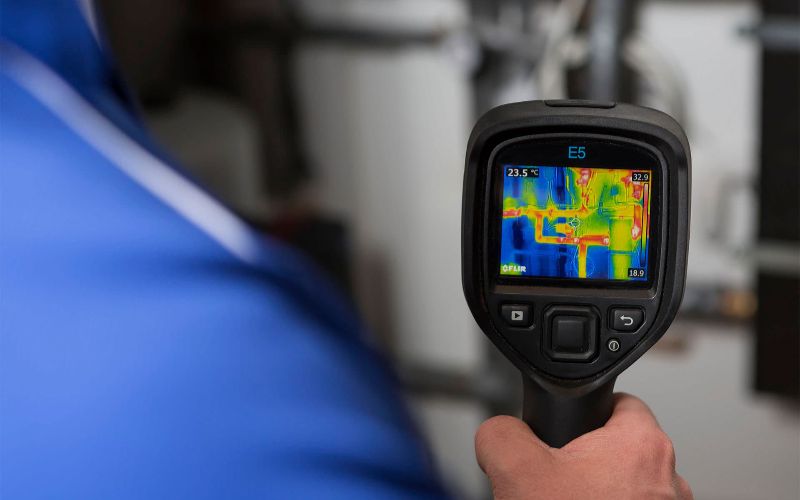
Thermal imaging cameras detect temperature differences on surfaces. A leaking hot water line beneath a slab creates a warm zone on the floor above it. A cold water leak inside a wall shows a cool patch on the drywall surface. A wet ceiling after a pipe failure above shows a distinct thermal pattern invisible to the naked eye.
Infrared cameras see what your eyes cannot. They provide a fast, visual map of where moisture and temperature anomalies exist in your home — without touching a surface.
Cost range: $300 – $600 for infrared thermal imaging inspection.
Electronic Line Tracing
Electronic line tracing equipment maps your entire plumbing system. A signal is sent through the pipe. Technicians track that signal through walls, ceilings, and under concrete slabs without guessing where lines run. This is particularly valuable in Frisco’s open-floor-plan homes, where plumbing routes through complex pathways hidden behind finished surfaces.
Line tracing eliminates exploratory demolition — one of the most expensive parts of old-style leak repair.
Hydrostatic Pressure Testing
A plumber isolates sections of your plumbing system and pressurizes them with water. Pressure gauges monitor for drops. A drop in pressure confirms an active leak in that section. This test pinpoints which plumbing zone contains the leak — narrowing the search area before acoustic and thermal detection.
Cost range: $150 – $400 for pressure testing.
Video Pipe Inspection (Camera Inspection)
A flexible high-definition camera travels through accessible pipe lines — main sewer lines, drain lines, and larger supply pipes. The camera streams real-time footage to a monitor. Technicians see cracks, root intrusion, corrosion, joint failures, and obstructions from the inside. This method is the gold standard for sewer line and main drain inspection.
Tracer Gas Detection
For hard-to-find underground leaks, tracer gas detection uses a non-toxic, non-flammable gas injected into the pipe system. The gas escapes through the leak point and rises through concrete or soil to the surface. Highly sensitive detectors pick up the gas concentration above ground and map the exact leak location. This method works even for very small leaks that acoustic and thermal methods may not catch.
Moisture Mapping
Moisture meters measure relative humidity and water content inside building materials — drywall, wood, insulation, and concrete. Technicians use moisture mapping to track the path of water damage frisco from a leak source, identify how far contamination has spread, and document the full scope of damage for insurance claims.
Our Leak Detection & Repair Process in Frisco
From the first call to the final repair, here is exactly what you can expect.
Step 1 — Symptom Review & Initial Assessment
Your call starts with a detailed conversation about what you’ve noticed — unusual water bills, sounds, floor spots, odors, or visible stains. This symptom review helps technicians arrive prepared with the right equipment for your specific leak type. It also focuses the inspection on the most likely problem areas, saving time and reducing cost.
Step 2 — Visual Inspection
Technicians conduct a thorough walkthrough of your home. They check all visible plumbing — under sinks, around toilets, at water heater connections, behind appliances, and along accessible pipe runs. This step rules out simple fixture leaks before advanced equipment is deployed.
Step 3 — Advanced Non-Invasive Detection
Based on symptoms and visual findings, technicians deploy the appropriate detection tools. Most inspections use a combination of:
- Thermal imaging for walls, floors, and ceilings
- Acoustic listening for slab and underground pipes
- Moisture meters to track water spread
- Pressure testing to confirm active leaks and isolate zones
- Electronic line tracing to map pipe routes
Detection typically takes 1 to 3 hours depending on property size and leak complexity.
Step 4 — Leak Location & Documentation
Once the leak is confirmed and located, technicians mark the exact position. You receive a clear report showing the leak location with reference points, the detection methods used, supporting thermal images or acoustic logs, and repair options with their trade-offs. No guesswork. No surprise demolition.
Step 5 — Repair
Repair method depends on the leak type, location, pipe material, and severity. Options include:
Spot Repair — For accessible leaks at joints, valves, or fittings. The damaged section is opened, repaired, and closed. Minimal disruption.
Pipe Rerouting — For slab leaks, the damaged underground section is abandoned. New piping runs through the attic, walls, or accessible areas above the slab. This avoids costly concrete penetration and is often the most cost-effective long-term solution.
Epoxy Pipe Lining — For corroded pipes with multiple failure points, epoxy lining seals the interior of the existing pipe from within. No excavation required. Pipe remains in place. The lining extends the useful life of the pipe for decades.
Trenchless Pipe Repair — For underground main lines and irrigation lines, trenchless methods like pipe bursting or cured-in-place pipe (CIPP) lining repair or replace the damaged section without full excavation. Your landscaping, driveway, and hardscaping stay intact.
Slab Penetration (Spot Repair) — For situations where rerouting is not practical, a targeted opening in the concrete slab accesses the damaged pipe directly. The repair is made, the concrete is restored, and the floor is returned to its original condition.
Full Repiping — When a plumbing system has multiple failure points, widespread corrosion, or aging materials throughout, full repiping replaces all supply lines. This is the permanent solution for homes where repeated leaks indicate systemic pipe failure.
Step 6 — System Testing & Verification
After repair, the plumbing system is pressure-tested to confirm the leak is fully resolved. Moisture meters verify that readings return to baseline. You receive written documentation of the repair — including photos, the repair method used, and warranty information.
Leak Detection & Repair Cost in Frisco, TX
Cost depends on leak type, detection method, repair approach, and the extent of damage. Here is a transparent breakdown based on current Frisco market data.
Detection Costs
| Service | Cost Range |
|---|---|
| Basic visual inspection | Included with service call |
| Acoustic leak detection | $250 – $500 |
| Thermal imaging inspection | $300 – $600 |
| Pressure testing | $150 – $400 |
| Video pipe camera inspection | $200 – $500 |
| Full leak detection (multi-method) | $300 – $700 |
Most detection appointments take 1 to 3 hours. Same-day appointments are available across Frisco.
Repair Costs
| Repair Type | Cost Range |
|---|---|
| Faucet / fixture repair | $150 – $400 |
| In-wall pipe repair | $500 – $2,000 |
| Main water line repair | $1,000 – $4,000 |
| Slab leak spot repair | $1,500 – $4,000 |
| Slab leak pipe rerouting | $2,000 – $5,000 |
| Epoxy pipe lining | $1,500 – $4,500 |
| Trenchless main line repair | $2,500 – $7,000 |
| Full whole-home repiping | $4,000 – $15,000+ |
What Drives the Final Cost
- Leak location — accessible fixtures cost less than under-slab or in-wall leaks
- Pipe material — copper, PEX, and galvanized each require different repair approaches
- Extent of existing damage — structural repairs, drywall replacement, and flooring restoration add cost
- Age of plumbing system — older systems may need additional repairs discovered during access
- Permit requirements — slab penetration and major rerouting require city permits in Frisco
Does Insurance Cover Leak Detection & Repair?
Most Texas homeowner policies cover sudden and accidental water damage — including damage caused by a sudden pipe burst or slab leak. However, policies typically exclude:
- Gradual leaks from neglect or deferred maintenance
- The cost of the pipe repair itself (only the resulting damage may be covered)
- Irrigation and pool line leaks
Many policies cover flooring replacement, drywall repair, and mold remediation when caused by a covered pipe failure. Review your specific policy. Work with your licensed plumber to document the leak cause thoroughly for your adjuster.
Residential vs. Commercial Leak Detection in Frisco
Leaks affect both homes and businesses. The detection technology overlaps — but the scope, urgency, and stakes differ.
Residential Leak Detection
Homeowners face leak risk in predictable areas:
- Under-slab supply lines in slab foundation homes
- In-wall pipe runs behind finished surfaces
- Irrigation systems in landscaped yards
- Water heaters, fixtures, and appliances
- Main service lines from meter to home
Residential leaks threaten property value, family health through mold exposure, and monthly water costs. Fast, non-invasive detection protects your home without tearing up your floors or opening your walls unnecessarily.
Commercial Leak Detection
Commercial properties face amplified risk. Larger plumbing systems, higher water pressure, constant operational demands, and the cost of business interruption make commercial leaks urgent.
Frisco commercial properties at elevated risk include:
- Restaurants — extensive hot water systems under commercial slabs
- Office buildings — complex multi-zone plumbing with concealed lines
- Retail centers and shopping complexes
- Medical and dental facilities with strict hygiene requirements
- Schools and childcare facilities
- Multi-family apartment complexes
Frisco’s “black gumbo” clay soil creates continuous pressure cycles on commercial foundations. Heavy equipment, HVAC systems, and foot traffic add further stress to underground pipes in commercial slab construction.
Commercial leak detection uses the same core technologies — thermal imaging, acoustic detection, pressure testing, video inspection — but at a larger scale and with added urgency. The goal is always to locate and contain the problem without shutting down operations.
Gas Leak Detection in Frisco — What You Must Know
Gas leaks are in a separate category from water leaks. They require immediate action.
Natural gas is odorless by nature. Mercaptan — the additive that creates the rotten egg smell — is your only sensory warning. By the time you smell it, gas has already accumulated in your home.
Immediate Steps If You Smell Gas
- Do not flip any light switches
- Do not use any electrical appliances or ignition sources
- Leave the home immediately — take everyone with you
- Leave the door open as you exit
- Call 911 and your gas provider from outside
- Call a licensed plumber for gas line inspection and repair
Common Causes of Gas Leaks in Frisco
- Aging or corroded gas supply lines
- Loose connections at appliances, water heaters, or furnaces
- Damaged flexible gas connectors behind ranges and dryers
- Ground movement shifting buried gas lines
- Improper DIY appliance installation
Professional Gas Leak Detection
Licensed plumbers use calibrated gas detection instruments and acoustic equipment to locate gas leaks precisely. This work requires a licensed plumber in Texas — not a general handyman. All gas line repairs must comply with the Texas State Plumbing Code and Frisco municipal permitting requirements.
Never attempt to find or repair a gas leak yourself.
DIY Leak Detection vs. Professional Service
Some homeowners try to locate leaks themselves before calling a plumber. Here is where DIY helps — and where it gets dangerous.
Simple DIY Water Meter Test
Turn off all water fixtures and appliances. Note the reading on your water meter. Wait 30 minutes without using any water. Check the meter again. If the reading has changed — you have an active leak somewhere in your system. This test costs nothing and confirms a problem exists. It does not tell you where the leak is.
Check Your Toilet for Leaks
Add a few drops of food coloring to your toilet tank. Do not flush. Wait 15 minutes. If color appears in the bowl — the flapper valve is leaking. A leaking toilet flapper wastes up to 200 gallons per day. Replace the flapper. This is one leak repair homeowners can handle safely.
Where DIY Ends
Any leak inside a wall, under a floor, beneath a slab, underground, or in a gas line requires professional detection. DIY attempts at these leaks typically result in:
- Unnecessary demolition — opening walls and floors in the wrong location
- Missed leaks — water travels far from its source before appearing on the surface
- Worsened damage — disturbing a compromised pipe can trigger a full failure
- Voided insurance — undocumented repairs can complicate or deny claims
- Code violations — unpermitted plumbing work creates problems at resale
Professional leak detection pays for itself. Finding a slab leak early — before foundation damage occurs — saves $8,000 to $12,000 in remediation costs. Fixing a pinhole leak in the wall before mold establishes prevents remediation costs of $3,000 to $6,000.
Leak Prevention Tips for Frisco Homeowners
Prevention costs far less than repair. These steps reduce your leak risk year-round.
Monitor Your Water Meter Monthly
Read your water meter at the same time each month. Track it on your phone. A sudden unexplained increase tells you something has changed. Early detection starts with paying attention to your baseline usage.
Know Your Home’s Water Pressure
High water pressure is the single most preventable cause of pipe stress. Frisco homes should maintain water pressure between 40 and 80 psi. Anything above 80 psi damages pipe joints, fixtures, and water heater connections over time. Install a pressure gauge on an outdoor spigot to check yours. If pressure runs high, install a pressure reducing valve (PRV) — a simple, inexpensive fix that protects your entire plumbing system.
Inspect Under Sinks Seasonally
Most in-home pipe leaks start at connection points under sinks, at supply valves, and behind appliances. Check under every sink four times per year. Look for staining, corrosion, soft cabinet floors, or moisture on the pipe surfaces. Catching a drip at a supply valve costs $50 to fix. Missing it for six months can cost $3,000 in cabinet, flooring, and mold damage.
Service Your Water Heater Annually
Flush your water heater tank annually to remove mineral sediment that accelerates corrosion. Inspect the anode rod every two years and replace it when depleted. Check the pressure relief valve annually. Most water heater failures in Frisco come from neglected maintenance — not age alone.
Protect Pipes Before Winter Cold Snaps
North Texas gets hard freezes several times per year. Pipes along exterior walls and in unconditioned attics freeze and burst when temperatures drop below 20°F. Insulate exposed pipes with foam pipe sleeves before winter. Know where your main water shutoff valve is. If a pipe freezes, shut the water off immediately before it thaws.
Schedule Irrigation System Inspections
Have your irrigation system professionally inspected each spring before the watering season starts. Check for broken heads, cracked lateral lines, and failed backflow preventers. Adjust scheduling to prevent overwatering — waterlogged soil accelerates foundation movement and pipe stress in Frisco’s clay.
Install a Smart Leak Detection System
Smart leak detectors like Flo by Moen or Phyn Plus connect to your main water line and monitor flow continuously. They detect micro-leaks, alert you by text or app when unusual flow patterns occur, and can automatically shut off your water supply if a major leak is detected. For Frisco homeowners in $400K+ homes, a smart shutoff system is one of the best protection investments available.
Why Choose Us for Leak Detection & Repair in Frisco, TX
Not every plumber has the equipment or training for precise, non-invasive leak detection. Here is what to look for — and what we bring to every job.
Licensed & Insured Texas Plumbers
All plumbing work in Texas requires a license from the Texas State Board of Plumbing Examiners (TSBPE). Verify your plumber’s license before scheduling any work. Unlicensed work voids warranties, creates liability, and causes problems at resale. Ask for the license number and verify it at the TSBPE website.
Non-Invasive Technology First
We lead with technology, not a sledgehammer. Thermal imaging, acoustic detection, electronic line tracing, and pressure testing locate the leak before we open anything. You keep your floors, your walls, and your landscaping intact until we know exactly where to work.
Transparent Upfront Pricing
No surprise invoices. You receive a written estimate before any work begins. Detection cost, repair options, and timelines are explained in plain language. You decide which repair approach fits your budget and situation.
Full-Service: Detection Through Restoration
We handle the complete job — leak detection, pipe repair, drywall patching, flooring restoration, and insurance documentation. You don’t need to coordinate three separate contractors for one leak event.
24/7 Emergency Response
A burst main line, a gas leak, or a flooded room cannot wait until Monday morning. We respond to emergency leak calls around the clock — every day of the year.
Serving All of Frisco and North Texas
- Frisco zip codes: 75033, 75034, 75035, 75036
- Nearby communities: The Colony, McKinney, Prosper, Little Elm, Plano, Allen, Celina, Denton
Frequently Asked Questions About Leak Detection in Frisco
How do I know if I have a slab leak?
The most common signs are warm spots on your floor, unexplained water bill increases, the sound of running water with all fixtures off, low water pressure, damp baseboards, and musty odors near floor level. If you notice any of these — especially in combination — call a plumber for a slab leak inspection. Do not wait. Slab leaks worsen quickly in Frisco’s shifting clay soil.
How long does leak detection take?
Most residential inspections take 1 to 3 hours. A simple fixture or in-wall leak may take less. A complex slab leak with multiple potential zones may take closer to 3 to 4 hours. Technicians give you a time estimate after the initial symptom review.
Can you find leaks without breaking my walls or floors?
Yes. Thermal imaging, acoustic detection, and electronic line tracing locate leaks through walls, floors, and concrete slabs without opening anything. We only access the specific point once the leak is confirmed and located precisely. This minimizes repair area and reduces overall cost.
How much does slab leak repair cost in Frisco?
Most slab leak repairs in Frisco range from $1,500 to $5,000, depending on the repair method. Pipe rerouting through the attic typically costs $2,000 to $5,000. A targeted slab penetration spot repair costs $1,500 to $4,000. Early detection keeps costs at the lower end. Foundation damage from a delayed repair can add $8,000 to $15,000 or more.
Does my homeowner’s insurance cover slab leaks?
Most Texas homeowner policies cover sudden and accidental pipe failures — including the water damage caused by a slab leak. The pipe repair itself is often excluded. Damage to flooring, drywall, and cabinets from the leak is typically covered. Confirm coverage with your insurer before work begins. Your plumber should provide full documentation to support your claim.
What causes slab leaks in Frisco specifically?
Frisco’s clay soil expands and contracts with every wet and dry cycle. This ground movement puts constant stress on copper pipes beneath your slab. Combined with original copper pipe corrosion in homes from the 1980s and 1990s, high water pressure, and construction imperfections from rapid development — slab leaks are a predictable and common event across Frisco’s neighborhoods.
How do I check for a water leak myself?
Turn off all water in your home. Record your water meter reading. Wait 30 minutes without using any water. Check the meter again. If the dial moved — you have an active leak. This test confirms a leak exists but cannot tell you where. Call a licensed plumber for precise location and repair.
What is the difference between leak detection and plumbing inspection?
A plumbing inspection is a general health check of your visible plumbing system — fixtures, connections, water heater, and accessible pipes. Leak detection is a targeted investigation using specialized equipment to find a specific, often hidden, active leak. Leak detection uses thermal cameras, acoustic sensors, pressure tests, and line tracing to go beyond what a standard inspection covers.
Get Fast Leak Detection & Repair in Frisco Today
Every day a hidden leak runs, it costs you money, damages your structure, and feeds mold inside your walls.
Frisco’s clay soil, slab foundations, and aging plumbing systems make hidden leaks a real and constant risk. The good news — caught early, most leaks are fast and affordable to fix. Ignored, they become foundation repairs, mold remediation projects, and insurance claims.
Our licensed team covers all of Frisco and surrounding North Texas communities. We arrive with the right technology, find the leak without tearing your home apart, and fix it permanently.
What you get when you call:
- Same-day appointments available across Frisco
- Non-invasive detection — thermal imaging, acoustic sensors, pressure testing
- Written estimate before any work begins
- Licensed, insured Texas plumbers (TSBPE verified)
- 24/7 emergency response for burst pipes and gas leaks
- Full insurance documentation support
- Repair through restoration — one team, one call
Don’t let a hidden leak become a $15,000 foundation repair. Call now.
Serving Frisco, TX — zip codes 75033, 75034, 75035, 75036 — and surrounding North Texas communities including The Colony, McKinney, Prosper, Little Elm, Plano, Allen, Celina, and Denton.