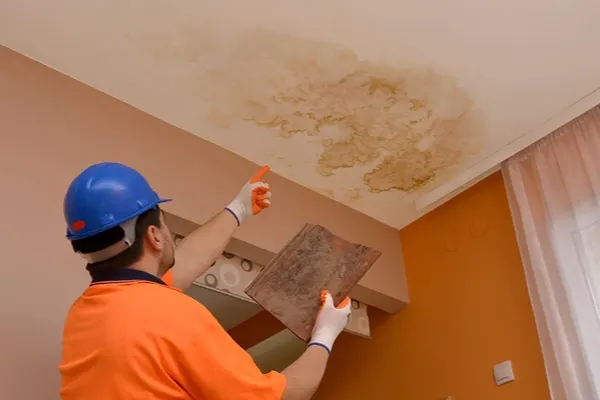
Structural Drying Frisco
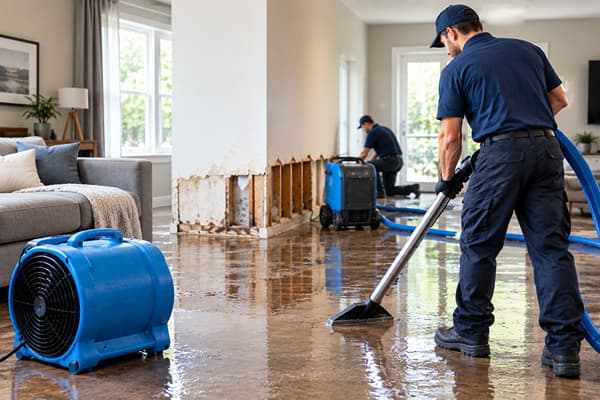
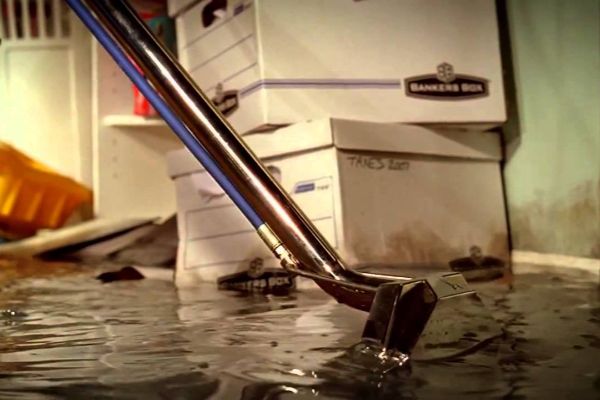
Water extraction is not the finish line. It is the starting point.
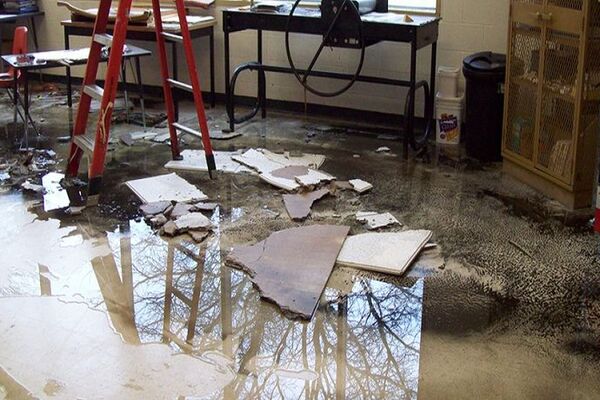
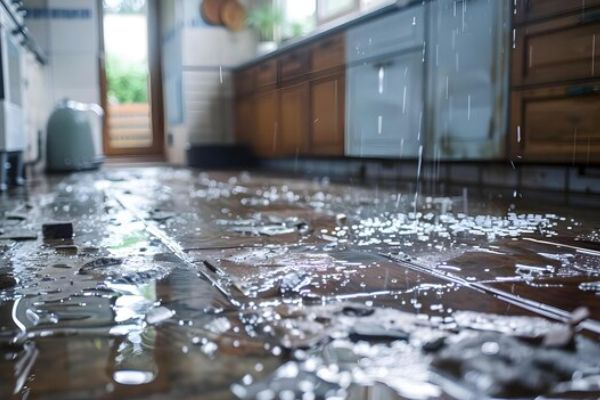
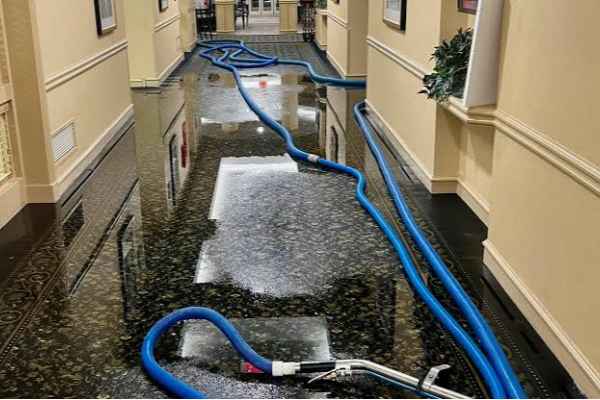
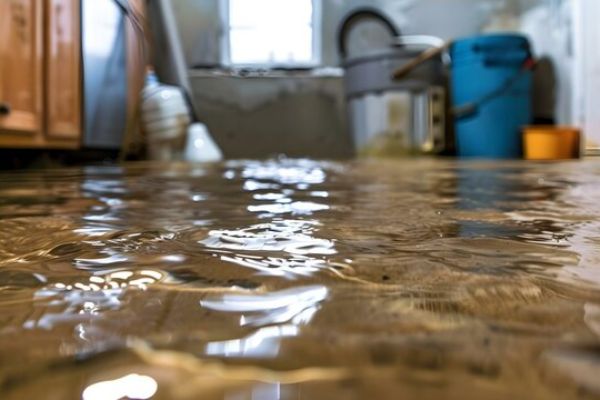
After a flood, burst pipe, or appliance failure — removing the standing water is step one. The real damage hides where water goes next. It wicks into drywall. It saturates subfloor materials. It fills wall cavities. It soaks into wood framing. None of that disappears when the floor looks dry.

That hidden moisture is what destroys homes. It warps structural framing, buckles hardwood floors, and feeds aggressive mold growth within 24 to 48 hours — all behind surfaces that look completely fine.
Structural drying is the science of removing that moisture completely. Not just from surfaces. From every building material, every wall cavity, every sub-floor assembly — down to safe, pre-loss moisture levels verified by certified equipment and documented daily.
Our IICRC Applied Structural Drying (ASD) certified team serves Frisco, TX and surrounding North Texas communities 24 hours a day. We do not guess at dryness. We measure it, document it, and prove it.
Why Structural Drying Is the Most Misunderstood Step in Water Restoration
Most homeowners assume water damage restoration ends when the water is gone. It doesn’t.
Visible water — the puddles on your floor, the soaked carpet, the wet ceiling — represents only a fraction of total moisture intrusion. Water follows physics. It moves through pressure differentials, capillary action, and vapor pressure. It does not stop at the surface.
Within the first hour of water contact:
- Drywall absorbs moisture through its paper facing and gypsum core
- Insulation compresses and loses structure as it saturates
- Wood subfloor panels swell along their grain lines
- Concrete wicks water upward through microscopic pores
- Wall cavities fill with moisture vapor that condenses on cooler internal surfaces
A standard shop vacuum or consumer fan does nothing to address moisture at these depths. Neither does simply waiting for the air to feel dry. Ambient humidity can normalize — the room feels dry — while wall cavities, subfloor assemblies, and wood framing remain dangerously wet inside.
This is where most DIY restoration fails. And it is where improperly certified restoration companies cut corners.
The IICRC S500–2021 Standard for Professional Water Damage Restoration — the definitive industry benchmark — states that drying goals must return structures, systems, and contents to an acceptable condition where microbial growth is inhibited. That means material moisture content, not room humidity alone, determines when drying is complete.
In Frisco’s humid North Texas climate, this distinction matters enormously. The ambient outdoor humidity in summer regularly exceeds 70 to 80 percent. Opening windows does not dry your home. Without industrial dehumidification equipment pulling moisture from the air faster than the environment replaces it — structural materials stay wet. Mold follows.
The Science Behind Structural Drying — Explained Simply
Structural drying is applied psychrometrics. Psychrometrics is the science of the relationship between air, temperature, and moisture. Professional structural drying technicians use these principles to create and control a drying environment inside your home.
Four factors drive every drying decision:
Temperature
Warm air holds more moisture than cool air. Raising the temperature inside the drying zone increases the air’s capacity to absorb moisture vapor from wet materials. This accelerates evaporation from surfaces. Most structural drying environments target 70°F to 90°F — the optimal range for refrigerant dehumidifier efficiency.
Relative Humidity (RH)
Relative humidity is the percentage of moisture in the air compared to the maximum it can hold at that temperature. When RH is high, wet materials cannot release moisture into air that is already saturated. Dehumidifiers lower the RH continuously — creating a vapor pressure differential that pulls moisture out of wet building materials and into the drier air, where it is captured and removed.
The IICRC S500 targets a relative humidity below 40 percent in most structural drying environments. Consumer-grade dehumidifiers cannot reach or sustain these levels. Industrial LGR (low-grain refrigerant) units can.
Airflow
Air movement is what carries moisture from wet material surfaces into the bulk air stream where dehumidifiers can capture it. High-velocity air movers create turbulence that strips the thin boundary layer of saturated air clinging to wet surfaces. Without active, directed airflow — even with dehumidifiers running — evaporation slows dramatically.
The IICRC S500 specifies one air mover per 50 to 70 square feet of affected floor area as a baseline. Actual placement uses a vortex drying pattern — air movers directed along walls in a circular flow — to maximize coverage and eliminate stagnant zones.
Vapor Pressure Differential
Moisture moves from high concentration to low concentration. When a dehumidifier drops the RH in the room air, it creates a vapor pressure differential — the driving force that pulls moisture out of wet materials and into the air. Structural drying maintains and maximizes this differential continuously. Daily psychrometric readings track whether conditions are moving toward target drying goals or whether equipment needs adjustment.
This is the complete system: warm temperatures accelerate evaporation. Air movers carry moisture vapor from surfaces into the air. LGR dehumidifiers capture that vapor and remove it. Daily monitoring confirms progress and drives adjustments. The result is structural materials dried to pre-loss moisture content — measurable, documented, and verifiable.
How Frisco’s Climate Affects Structural Drying
Structural drying in Frisco requires specific protocols that differ from drier climates. Knowing the local conditions is not optional — it changes every equipment decision.
High Summer Humidity
Frisco sits in a humid subtropical climate. Summer relative humidity in North Texas regularly runs 60 to 85 percent outdoors. In a closed home after a water loss, interior humidity can spike far higher. This means the outdoor air is never dry enough to help with drying during summer months. Opening windows adds moisture — it does not remove it.
All Frisco structural drying jobs during warm months operate as closed drying systems — the home is sealed, and dehumidifiers work to lower interior RH below outdoor levels continuously. Equipment runs 24 hours a day until drying goals are met.
Winter Freeze-Thaw Cycles
Frisco experiences sharp winter cold snaps — temperatures below 20°F trigger widespread pipe freeze events. These jobs often produce large-volume, fast-moving water losses in multiple rooms simultaneously. Cold temperatures below 45°F push refrigerant dehumidifiers out of their efficient operating range. Desiccant dehumidifiers, which operate effectively from 0°F to 120°F, are deployed for freeze-event restoration jobs in January and February.
Clay Soil Foundation Effects
Frisco’s reactive clay soil expands and contracts with every moisture cycle. This ground movement stresses concrete slab foundations and the pipes running beneath them. When a slab leak or under-foundation pipe failure floods a lower level, moisture does not just sit on the surface. It migrates into the concrete slab itself — a Class 4 drying scenario requiring specialty drying mats and extended timelines. Concrete slabs in Frisco homes routinely require 7 to 14 days of dedicated drying after significant water intrusion.
Newer Construction — Tighter Building Envelopes
Frisco’s newer subdivisions — Phillips Creek Ranch, Panther Creek, Starwood, The Grove — are built to modern energy efficiency standards. Tighter insulation and reduced air infiltration protect against energy loss. They also trap moisture aggressively after a water loss. There is less natural air exchange to carry moisture out. Equipment must work harder, run longer, and be sized more aggressively to achieve the same drying goals in a tight envelope compared to older, leakier construction.
Warning Signs That Structural Drying Was Done Incorrectly
Many Frisco homeowners discover months after a water event that their restoration was incomplete. These are the signs of inadequate structural drying.
Persistent Musty Odors
A musty or earthy smell in a room that had water damage — weeks or months after restoration — almost always means residual moisture and mold growth inside wall cavities or beneath flooring. Odors that return after airing out the space confirm biological activity, not just stale air.
Buckling or Cupping Hardwood Floors
Hardwood floor boards that cup (edges rise above center) or crown (center rises above edges) after a water event indicate moisture imbalance in the wood. If floors were not dried to proper moisture content before restoration was declared complete, the wood continues absorbing ambient moisture and deforms. This movement often appears weeks after the event.
Drywall Cracks, Soft Spots, or Staining
Drywall that was wet but not removed often dries on the surface while retaining moisture in the gypsum core. That retained moisture continues to wick toward the surface, causing joint cracking, soft spots, and yellow or brown staining. New cracks appearing near water-damaged areas are a flag.
Mold Growth Behind Walls
The first visible mold after water damage frequently appears at baseboard level — dark staining along the wall-floor junction. This is the drainage point where moisture migrated down through the wall cavity. By the time it is visible at the base, mold has established throughout the wall cavity above it.
Doors and Windows That Stick or Won’t Close
Wood framing that did not dry to proper moisture content swells and shifts. This movement causes door frames to rack and window frames to bind. Doors and windows that closed fine before the water event but stick afterward signal structural framing that retains excess moisture.
Elevated Moisture Readings Without Visible Damage
Moisture meters reading above 16 percent in wood framing or above 1 percent in drywall confirm active moisture retention — regardless of surface appearance. Any reading above pre-loss baseline that persists weeks after a water event means drying was incomplete.
Our Structural Drying Process in Frisco, TX
Every structural drying job follows the ANSI/IICRC S500–2021 Standard, Chapter 12 — the operational backbone of professional water damage drying. Here is the complete process.
Step 1 — Initial Assessment & Moisture Mapping
Technicians arrive and immediately map the moisture profile of the entire affected area. This step uses:
- Penetrating moisture meters — pin probes that measure actual moisture content inside drywall, wood, and flooring materials at calibrated depths
- Non-invasive moisture meters — electromagnetic sensors that scan surfaces without penetration for rapid coverage assessment
- Thermo-hygrometers — measure temperature, relative humidity, and dew point at every enclosed zone
- Thermal imaging cameras — identify hidden moisture behind walls and ceilings through temperature differentials that are invisible on the surface
Every reading is recorded with its location. This moisture map establishes the baseline against which daily drying progress is measured. It also defines the full scope of affected material — including areas that look dry on the surface but retain moisture inside.
Step 2 — Water Category & Damage Class Determination
The source and contamination level of the water determines the treatment protocol. Per IICRC S500:
- Category 1 (clean water from supply lines) — standard drying protocol
- Category 2 (gray water from appliances or toilets) — antimicrobial treatment required alongside drying
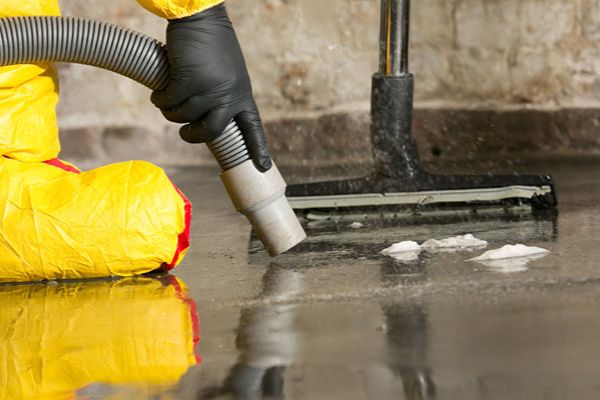
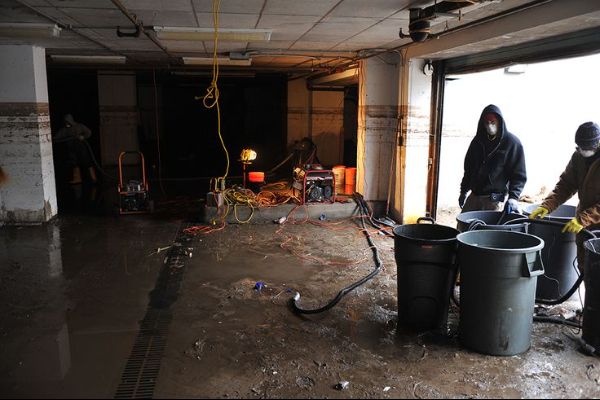
- Category 3 (black water from sewage or storm flooding) — biohazard removal, antimicrobial treatment, and drying protocol
The damage class determines equipment sizing:
- Class 1 — minimal absorption, small area
- Class 2 — significant absorption, full room
- Class 3 — saturation of walls, ceilings, and floors throughout
- Class 4 — deep absorption into low-porosity materials (concrete, hardwood, brick)
Most Frisco residential water losses fall into Class 2 or Class 3. Slab leak events and storm flooding often produce Class 3 or Class 4 conditions requiring extended drying timelines.
Step 3 — Psychrometric Baseline Recording
Before equipment is deployed, technicians record the psychrometric baseline:
- Dry-bulb temperature (actual air temperature)
- Relative humidity (RH percentage)
- Dew point (temperature at which air moisture condenses)
- Grains per pound (GPP) — the absolute moisture content of the air
These readings occur at minimum one point per enclosed zone. They establish the starting drying conditions and allow technicians to calculate the exact dehumidification capacity needed per room. Per IICRC S500, equipment selection must be based on psychrometric calculations — not experience or intuition alone.
Step 4 — Drying Plan Development
The psychrometric baseline and damage class inform a formal drying plan. This plan specifies:
- Number and type of air movers required per affected room
- Number and capacity of dehumidifiers required per zone
- Whether refrigerant LGR or desiccant dehumidifiers are appropriate given temperature conditions
- Whether cavity drying (injection systems) is required for wall cavities
- Specialty equipment requirements — floor drying mats, wall drying panels, under-slab systems
- Target drying goals — specific moisture content levels for each material type
- Estimated drying timeline in days
This plan is documented and shared with the property owner and insurance adjuster at the start of the job.
Step 5 — Equipment Deployment
Equipment is placed according to the drying plan with precision — not convenience.
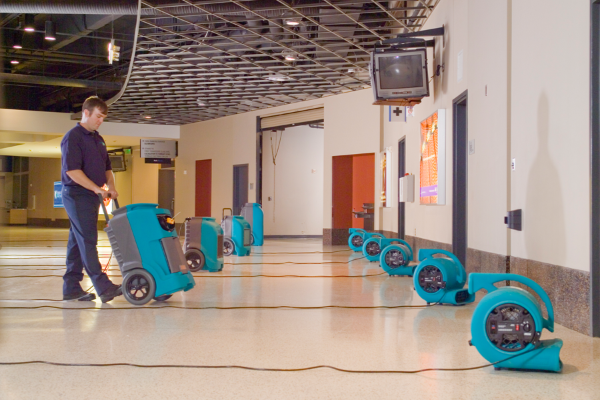
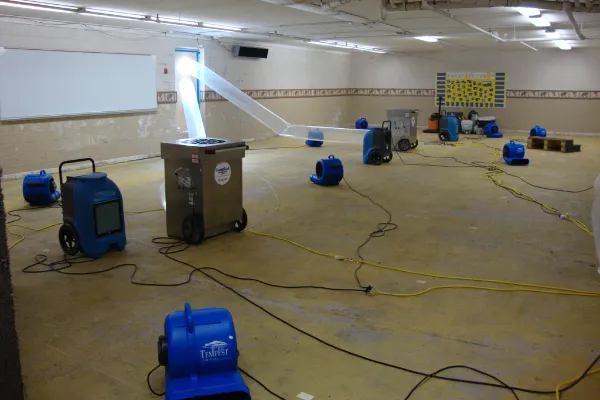
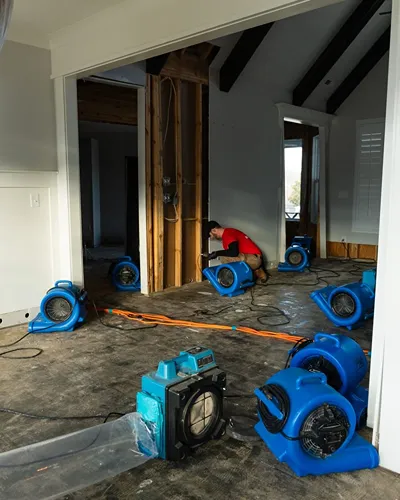
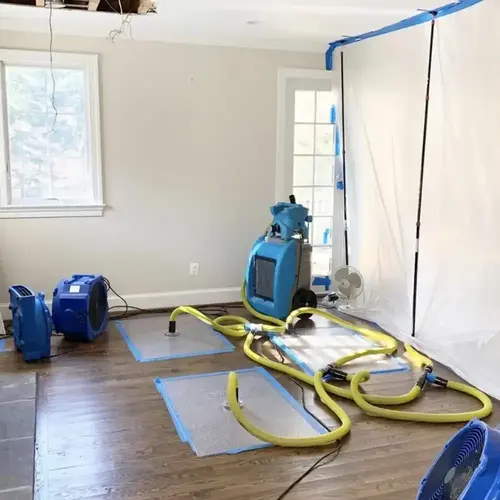
Air Movers are directed along walls using the vortex drying pattern — creating circular airflow that covers entire floor areas without stagnant zones. IICRC S500 specifies 1 air mover per 50 to 70 square feet of affected floor area as a baseline for Class 2 conditions. Class 3 events require higher density.
LGR Dehumidifiers are sized to match the moisture load of each zone. A standard LGR unit rated at 65 to 140 pints per day is calculated against the cubic footage of the affected area. Multiple units run in larger spaces or severely saturated Class 3 and 4 conditions.
Desiccant Dehumidifiers are deployed for below-45°F conditions — freeze-pipe events in winter — or when drying targets require sub-30 percent RH levels that refrigerant units cannot sustain.
Injectidry Wall Drying Systems drill small access ports into wall cavities and direct conditioned air through manifolds inside the wall structure. This is the only way to dry wall cavities that cannot be opened without full demolition. It saves the drywall, avoids unnecessary reconstruction, and dries the structural framing inside.
Floor Drying Mats apply directed heat and suction directly to wet hardwood and engineered wood floors — dramatically increasing the chance of in-place floor restoration versus replacement.
Concrete Slab Drying Systems use heated air and suction systems designed specifically for below-slab and slab moisture. These are deployed for Frisco’s frequent slab leak events where moisture has migrated into the concrete itself.
Step 6 — Daily Monitoring & Documentation
Structural drying is not a set-it-and-forget-it process. Per IICRC S500, psychrometric readings and material moisture content measurements are recorded at every monitoring point every 24 hours. Daily records include:
- Temperature and RH at dehumidifier inlet and outlet
- Ambient temperature and RH in each zone
- Moisture content readings at every established monitoring point in structural materials
- Equipment status and adjustments made
Daily data confirms whether conditions are moving toward drying goals. If moisture readings stagnate or deteriorate — due to equipment underpowering, open windows, or hidden moisture discovered — adjustments are made immediately. Additional equipment is added. Air mover positions are changed. The drying plan is updated.
This documentation is your protection. It proves the drying was done correctly and completely. Insurance adjusters require it. Property buyers may request it. It is the difference between verified restoration and hope.
Step 7 — Cavity Assessment & Decision Making
Wall cavities require a decision at every job: inject and dry in place, or open and remove the wet material?
This decision depends on:
- Water category (Category 3 black water always requires removal)
- Extent of saturation and elapsed time since water intrusion
- Material type (paper-faced drywall versus cement board)
- Presence of insulation (wet insulation cannot be dried in place effectively)
- Moisture readings after 24 to 48 hours of injection drying
When cavity injection achieves downward moisture trends within the first 48 hours — and water category allows — in-place drying continues. When readings stagnate or category mandates removal — the affected drywall is cut out to expose the framing cavity for direct drying. This decision protects against concealed mold that injection drying cannot address once growth has established.
Step 8 — Drying Goal Verification & Clearance
Drying is complete only when material moisture content readings at all monitoring points reach pre-loss dry standard — the equilibrium moisture content (EMC) specific to each material in local ambient conditions.
For wood framing in Frisco, that target is typically 8 to 13 percent moisture content. For drywall gypsum, readings at or below 0.4 to 1 percent. For concrete slabs, measurements to verify return to baseline compared to unaffected sections of the same slab.
Reaching target RH in the room air is not the clearance standard. Every monitoring point in every material must reach its individual drying goal. Ambient air conditions are recorded at final clearance alongside all material readings.
The completed drying report documents:
- Starting moisture readings at every monitoring point
- Daily progression data
- Final clearance readings at every point
- Psychrometric data from start to finish
- Equipment log — what ran, when, and at what capacity
- Total days to drying completion
This report goes to your insurance adjuster. It is the verified proof that your home is structurally dry.
Structural Drying Equipment — What Professionals Use vs. What Doesn’t Work
The right equipment is not optional. It is what makes the difference between a dried home and a mold-infested one.
Industrial LGR Dehumidifiers vs. Consumer Units
A standard big-box store dehumidifier removes 30 to 70 pints of moisture per day. It operates efficiently only above 65°F and above 50 percent RH. Below those thresholds, efficiency drops sharply. Consumer units are designed for humidity control in basements — not for structural drying.
An industrial LGR (low-grain refrigerant) dehumidifier removes 100 to 200+ pints per day. It maintains efficiency down to 40°F and 25 percent RH — well below the levels a drying job creates. A single industrial LGR outperforms four to six consumer units in real drying conditions.
For a Class 2 loss in a 1,200 square foot Frisco home, proper equipment sizing requires two to four LGR units. A consumer dehumidifier extends drying time by days — providing mold the window it needs.
High-Velocity Air Movers vs. Box Fans
Box fans move large volumes of air at low velocity. Low velocity does not strip the boundary layer from wet surfaces. It recirculates humid air without creating the turbulence needed to accelerate evaporation.
High-velocity air movers (axial and centrifugal designs) push 1,500 to 3,000 CFM of directed airflow at low angles across wet surfaces. They strip the boundary layer and feed moisture-laden air directly toward dehumidifier intakes. Multiple units create the vortex airflow pattern specified in IICRC S500.
Desiccant Dehumidifiers for Extreme Conditions
Standard LGR refrigerant units lose efficiency below 45°F. Winter freeze events in Frisco — when pipes burst in unheated attics or crawlspaces — require desiccant units. Desiccant systems use silica gel or lithium chloride wheels to pull moisture from air through chemical affinity. They operate from 0°F to 120°F with consistent performance. Every professional restoration company covering North Texas needs desiccant capacity in fleet — not just refrigerant units.
Injection Drying Systems for Wall Cavities
Standard air movers only dry exposed surfaces. Wall cavities are enclosed. Without drilling access ports and injecting conditioned air directly into the cavity, wall framing and cavity insulation cannot dry to target levels — even with air movers and dehumidifiers running at full capacity in the room.
Injectidry systems solve this. Small ports (typically 3/4 inch diameter) are drilled into the drywall at strategic intervals. Manifold hoses connect to air movers or desiccant units. Conditioned air flows through the cavity continuously. Moisture exits through exhaust ports and is captured by room dehumidifiers. The result: wall framing dried in place without full demolition.
Thermal Imaging for Hidden Moisture Verification
Thermal cameras see temperature differences — not moisture directly. Wet materials have a lower thermal mass than dry materials and appear cooler on an infrared camera. This makes them visible in walls, ceilings, and under floors without opening a single surface. Thermal imaging at the start of a job finds moisture the initial inspection missed. Thermal imaging during daily monitoring catches new moisture migration. Thermal imaging at clearance confirms that no hidden wet areas remain.
How Long Does Structural Drying Take in Frisco?
Timeline depends on damage class, materials affected, water category, and equipment deployed. Here are realistic expectations based on Frisco-specific conditions.
Class 1 — Minimal Absorption
Typical timeline: 1 to 3 days
Small area, low-porosity materials, clean water source caught quickly. A toilet overflow on tile flooring caught within the first hour. A refrigerator ice maker leak on vinyl flooring discovered before it reached walls.
Class 2 — Significant Absorption
Typical timeline: 3 to 5 days
Full room with carpet, padding, and drywall affected. Water traveled along wall bases and wicked 12 to 18 inches up drywall. This is the most common residential scenario in Frisco — a burst supply line under a sink, a washing machine overflow, or a toilet supply line failure.
Class 3 — Extensive Saturation
Typical timeline: 5 to 7 days
Multiple rooms, ceilings, and structural framing affected. Storm water entry through a door or window. Water heater failure flooding a laundry room into an adjacent bedroom and hallway. Cavity injection systems typically required. Partial drywall removal often necessary.
Class 4 — Deep Structural Absorption
Typical timeline: 7 to 14+ days
Low-porosity materials with deep absorption — concrete slab, hardwood floors, brick, or stone. Slab leak events in Frisco frequently produce Class 4 conditions in the concrete itself. Specialty drying equipment and extended monitoring required. Daily readings track concrete moisture regression toward pre-loss baseline.
Frisco-specific note: Summer humidity in North Texas extends drying timelines compared to drier climates. Closed-system drying with properly sized equipment is mandatory. Under-powered jobs or open drying in summer will not reach target moisture levels on schedule — and mold will establish before drying completes.
Structural Drying Cost in Frisco, TX
Cost depends on affected area, damage class, materials, and required drying timeline. Here is a transparent breakdown of current market rates.
Equipment & Monitoring Costs
| Service | Daily Rate / Cost |
|---|---|
| LGR dehumidifier (per unit) | $100 – $150 per day |
| High-velocity air mover (per unit) | $30 – $50 per day |
| Desiccant dehumidifier (per unit) | $175 – $250 per day |
| Injectidry wall drying system | $50 – $100 per day per setup |
| Floor drying mat system | $100 – $200 per day |
| Thermal imaging inspection | $300 – $600 |
| Daily monitoring and documentation | Included in service |
Total Project Cost by Damage Class
| Damage Class | Typical Total Cost |
|---|---|
| Class 1 (1–3 days) | $1,000 – $2,500 |
| Class 2 (3–5 days) | $2,500 – $5,000 |
| Class 3 (5–7 days) | $4,500 – $9,000 |
| Class 4 (7–14+ days) | $7,000 – $15,000+ |
What Affects Your Final Cost
- Affected square footage — larger areas require more equipment and longer runtimes
- Material type — hardwood floors and concrete slabs require specialty equipment
- Water category — Category 2 and 3 add antimicrobial treatment costs
- Season — summer jobs in Frisco require more dehumidification capacity due to high outdoor humidity
- Drywall removal — partial demo to access cavities adds labor and disposal costs
- Reconstruction — drywall replacement, flooring, and painting are separate from drying costs
Does Insurance Cover Structural Drying?
Yes — in most cases. Structural drying is a standard covered service under homeowner’s insurance for sudden and accidental water damage events. Insurance adjusters expect and require the following documentation to process a structural drying claim:
- Daily moisture logs at all monitoring points
- Psychrometric records from start to clearance
- Equipment logs showing what ran and when
- Before and after thermal imaging
- Final clearance report with certified dryness confirmation
A qualified restoration company produces all of this automatically. If your contractor cannot provide this documentation — that is a serious red flag. Undocumented drying creates disputes with adjusters and leaves you with no proof of completed work.
Residential vs. Commercial Structural Drying in Frisco
Structural drying science is identical across property types. Scale, timeline pressure, and documentation requirements differ significantly.
Residential Structural Drying
Frisco homeowners deal primarily with:
- Slab leak events flooding lower-level rooms and saturating concrete
- Burst pipes in attics during winter freeze events
- Storm water intrusion through doors, garage floors, and window wells
- Appliance failures flooding kitchen and laundry areas
- Roof leaks saturating attic insulation and ceiling assemblies
Residential drying prioritizes family health, minimal disruption, and complete recovery. Equipment runs 24 hours. Families often stay if the event is contained to specific rooms. Clearance documentation supports insurance claims directly.
Commercial Structural Drying
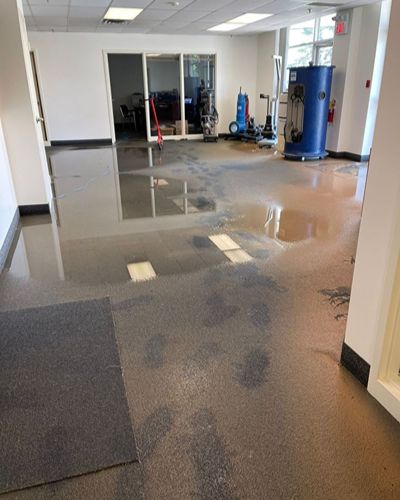
Commercial properties in Frisco face amplified risk from water intrusion. Multi-tenant office buildings, restaurants near Legacy Drive and The Star, retail centers along Preston Road, and medical facilities all face water loss events that demand faster response and more aggressive equipment deployment.
Commercial structural drying adds complexity:
- Larger floor plates require significantly more equipment
- Occupied tenants limit daytime access — drying runs after hours
- Business continuity is a priority — contained zones allow partial operation
- Multiple material types (carpet tile, concrete, drop ceiling systems, server room flooring) require different drying approaches in the same building
- Documentation for landlords, property managers, tenants, and insurance adjusters must be thorough and timely
Commercial jobs in Frisco often require 10 to 20+ pieces of equipment across multiple floors. Response speed determines how much of the building stays operational.
Why Structural Drying Without Certification Fails
Not every water damage company is qualified to perform structural drying. The IICRC Applied Structural Drying (ASD) certification is a specific, separate credential from general water damage training. Technicians must complete classroom training and a hands-on practical drying exercise to earn it.
Companies without ASD-certified technicians typically:
- Use rule-of-thumb equipment placement instead of psychrometric calculations
- Run equipment for a fixed number of days rather than until drying goals are verified
- Lack the equipment variety (LGR, desiccant, injection systems) to handle different scenarios
- Skip daily moisture documentation — leaving you with no proof of completed work
- Miss cavity moisture — declaring completion based on surface readings while wall framing remains wet
The result is a home that looks restored. Inside the walls and under the floors, moisture remains. Mold establishes within 30 days. The homeowner calls for mold remediation months later — paying twice for a problem that should have been solved the first time.
When hiring a structural drying company in Frisco — ask specifically for IICRC Applied Structural Drying (ASD) certification. Verify it at the IICRC’s online registry at iicrc.org. This single credential confirms the technician has the training to perform real structural drying — not just run fans and leave.
Frequently Asked Questions About Structural Drying in Frisco
What is structural drying and why do I need it?
Structural drying is the process of removing moisture from building materials — drywall, wood framing, concrete, insulation, and flooring — after a water loss. Extraction removes surface water. Structural drying removes moisture that has wicked into building components. Without it, materials retain moisture that causes warping, mold, and structural decay — even when floors and surfaces feel dry.
How do I know if structural drying is working?
Your technician records daily moisture readings at established monitoring points throughout the affected area. Each reading should show a downward trend toward the drying goal — the pre-loss moisture content for each material. You should receive a daily update showing these readings. If your contractor cannot produce daily moisture logs — structural drying is not being performed to IICRC S500 standards.
Can I run my own fans and dehumidifier instead?
A consumer dehumidifier and box fans are not structural drying. They provide minimal moisture removal relative to what industrial equipment delivers. In Frisco’s humid summer climate, a consumer unit cannot lower RH fast enough to create the vapor pressure differential needed to pull moisture from structural materials. Mold establishes within 24 to 48 hours. The cost of mold remediation — $3,000 to $8,000 — far exceeds the cost of proper structural drying from day one.
Why is my home still humid after the fans have been running for days?
High ambient humidity in North Texas means a room’s RH can stay elevated even with fans running — because humid outdoor air continually replaces the moisture being moved. Real structural drying requires a closed-building system with properly sized industrial dehumidifiers actively lowering RH below outdoor levels. If RH is not dropping below 40 to 50 percent inside the drying zone — equipment is inadequate for the job.
Does structural drying damage my hardwood floors?
Done correctly, structural drying can save hardwood floors that might otherwise require full replacement. Floor drying mat systems apply directed heat and suction directly to the floor surface. Daily moisture content readings track progress in the wood itself. Floors dried to proper equilibrium moisture content — typically 8 to 13 percent for North Texas conditions — stabilize and do not warp. The key is starting within the first 24 to 48 hours of water contact.
How many days does a typical Frisco home take to dry?
Most residential jobs in Frisco take 3 to 7 days of continuous equipment operation. Class 1 clean water losses in small areas may finish in 1 to 3 days. Class 3 or 4 events involving storm flooding, slab leak saturation, or freeze-pipe failures across multiple rooms may require 7 to 14 days — especially when concrete slab drying is needed. Frisco’s summer humidity extends timelines for all classes compared to drier climates.
Will I need to leave my home during structural drying?
For small, well-contained events — no. The equipment is loud but safe, and unaffected areas remain fully livable. For larger Class 3 events involving multiple rooms, Category 3 contamination, or significant chemical treatments — temporary relocation for 2 to 5 days is advisable. Your technician provides honest guidance based on the specific scope of your job.
What is the difference between water mitigation and structural drying?
Water mitigation is the immediate response phase — stopping the source, extracting standing water, removing unsalvageable materials. Structural drying is the phase that follows — using calibrated equipment and psychrometric monitoring to remove moisture from building materials down to pre-loss standards. Both are required for complete restoration. Mitigation without structural drying leaves moisture in the structure. Structural drying without proper mitigation extends timelines and costs unnecessarily.
Get Certified Structural Drying in Frisco, TX Today
Surface dry is not the same as structurally dry.
Water sitting in your walls, under your floors, and inside your concrete slab right now will cause mold, warping, and structural decay — whether you can see it or not. The only way to stop it is properly sized industrial equipment, daily moisture monitoring, and certified verification that every building material reached its pre-loss dry standard.
Our IICRC Applied Structural Drying (ASD) certified team has the equipment, the training, and the documentation systems to do this right. We serve all of Frisco and surrounding North Texas — responding within the hour for emergency water losses.
What you get when you call:
- IICRC Applied Structural Drying (ASD) certified technicians
- Psychrometric-based drying plans — sized to your specific job, not guesswork
- Industrial LGR and desiccant dehumidifiers, high-velocity air movers, cavity injection systems
- Thermal imaging at start, daily monitoring, and final clearance verification
- Complete daily moisture logs and drying documentation for insurance
- 24/7 emergency response across Frisco, TX
- Transparent written estimates before any equipment is deployed
Do not let a water loss become a mold problem. Call now.
📞 [Your Phone Number] 📋 [Book Service / Free Assessment Button]
Serving Frisco, TX — zip codes 75033, 75034, 75035, 75036 — and surrounding North Texas communities including The Colony, McKinney, Prosper, Little Elm, Plano, Allen, Celina, and Denton.