
Dehumidification in Frisco, TX
Wet walls and floors do not dry on their own, and damp air keeps them wet. We pull the moisture out of your property with commercial dehumidifiers and keep checking until it is truly dry.
IICRC Certified | 60-Minute Response | 24/7 Live Dispatch | Direct Insurance Billing
30% to 50%
A healthy indoor humidity range. The U.S. EPA says stay below 60%.
24 to 48 hours
How quickly wet materials should be dried to help stop mold, says the EPA.
60 minutes
How fast we aim to reach your Frisco property after you call.
24/7
Live dispatch every day of the year, including holidays.
What Is Dehumidification After Water Damage?
When a pipe bursts or a storm leaks in, the water you can see is only part of the problem. Some of it soaks into drywall, wood, and carpet. Some of it turns into vapor and floats in the air. That damp air settles back into the walls and floors, so they stay wet.
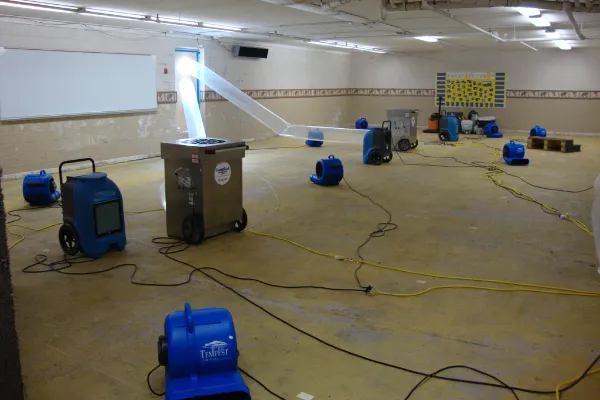
Dehumidification breaks that cycle. Our machines pull water out of the air, and air movers push dry air across wet surfaces. Together they dry your property from the inside out, without tearing out more than we have to.
It is one step in our full water damage restoration service. If there is still standing water, we start with water extraction and then move on to drying.
Why Damp Air Is a Problem
If a home stays damp for too long, the trouble grows every day:
The Number to Know
The U.S. EPA suggests keeping indoor humidity below 60%, and ideally between 30% and 50%. Above that range, mold has an easier time growing.
We check your humidity with a hygrometer and your walls and floors with a moisture meter. That way we work from real readings, not guesses.
The Equipment We Use, in Plain Words
You may see several machines in your home. Each one has its own job. Not sure where the moisture is hiding? Our moisture detection service can find it.
Dehumidifiers
These pull water vapor out of the air. Refrigerant models work well in warm rooms. Desiccant models do better in cool, very damp spaces. LGR models are built to keep pulling moisture even when the air is already fairly dry.
Air movers
These are strong fans that blow air across wet floors and walls. Moving air helps water leave the surface so the dehumidifier can catch it. Without airflow, moisture stays stuck in the material.
Meters and hygrometers
Moisture meters show how wet your walls and floors are. Hygrometers show the humidity and temperature of the air. We take new readings on every visit, so we know the drying is really working.
How Our Dehumidification Process Works
Every job follows the same six steps. We explain each one as we go, so you always know what is happening in your home. Our structural drying work follows the same plan.
1. Walk through and measure
We look at each room and check walls, floors, and ceilings with moisture meters. We also record the humidity and temperature of the air.
2. Make a drying plan
We decide how many machines your space needs and where they should go. We explain the plan and the cost in plain words before any work starts.
3. Set up the equipment
We place dehumidifiers and air movers and close off the wet area if needed. That keeps the machines working on the wet spaces, not the whole house. We move furniture that blocks airflow.
4. Check every day
A technician comes back to take new readings and adjust the machines. If some spots dry slowly, we move the equipment to them.
5. Confirm it is dry
We compare your wet materials to the same materials in dry parts of your property. The goal is to bring them back to normal dry levels, not just to make them feel dry.
6. Pick up and report
We remove all equipment and give you a written record of the readings, dates, and machines used. Your insurance company can use it for your claim.
Store-Bought Dehumidifier or Professional Drying?
A home dehumidifier is fine for a damp basement or a humid closet. After a leak or flood, the job is bigger. Here is how the two compare.
| Question | Home dehumidifier | Professional drying |
|---|---|---|
| Best for | Everyday humidity in one room | Water damage in walls, floors, and ceilings |
| How much water it removes | A small amount | Much more, with several machines working at once |
| Moves air across wet surfaces | No | Yes, with air movers |
| Checked with meters | Usually not | Yes, on every visit |
| Written records for insurance | No | Yes |
If your home is only humid and there was no leak, a home unit may be all you need. We are happy to tell you so.
What You Get From Us
Is your home feeling damp?
Call us any time, day or night. A real person answers and sends a technician. If the dampness comes from a problem we cannot fix, such as a broken pipe, we tell you plainly so you can call the right professional.
Why Frisco Properties Often Need Dehumidification
North Texas weather makes moisture problems common:
Frisco Neighborhoods We Serve
We work across Frisco, including these neighborhoods:
Who Is Behind This Service
WDR Frisco TX is a locally based restoration team that has helped Frisco homes and businesses for more than 10 years. Our office is at 10750 John W. Elliott Dr, Frisco, TX 75033.
Last updated: September 2026. Written by the WDR Frisco TX restoration team.
Is Dehumidification Covered by Insurance?
Often, yes, when it is part of a claim for sudden damage such as a burst pipe or a storm leak. Coverage depends on your policy and the cause of the damage, so check with your agent.
We give you readings, dates, and photos that support your claim, and we can talk with your adjuster directly.
Dehumidification FAQs
How long does dehumidification take?
Many jobs take about three to five days. A small, lightly wet area may dry faster. A large or soaked space can take longer. We check the readings every day and tell you when the space is dry.
Can I just use a dehumidifier from the store?
For a damp room with no leak, often yes. After a leak or flood, water is inside your walls and floors. A home unit is too small to dry that, and it does not move air across the wet surfaces. Professional equipment dries faster and we check the results with meters.
How do you know when my home is dry?
We measure. We check your wet walls and floors with a moisture meter and compare them to the same materials in dry parts of your property. When they match, the drying is done. We write down the readings for you.
Will a dehumidifier get rid of mold I already have?
No. Drying stops mold from spreading and helps prevent new growth, but it does not remove mold that is already growing. If you see or smell mold, see our mold remediation service.
How soon should I call after water damage?
As soon as you can. The EPA advises drying wet materials within 24 to 48 hours to help stop mold. The sooner drying starts, the more of your home we can save instead of replace.
Will the equipment raise my electric bill?
Yes. Dehumidifiers and air movers use power while they run. Ask your insurance agent whether extra electricity costs are covered under your claim. We note how long the equipment ran in your records.
Do I need to move my furniture?
We walk the space first and decide what needs to move. Many times we can work around your furniture. If something blocks airflow, we move it for you and put it back safely.
How much does dehumidification cost in Frisco?
Our on-site damage assessment is free. Cost depends on how large and how wet the space is and how many machines it needs. We explain the plan and the cost before any work starts.
Related Services
Get Your Frisco Property Dry Again
Do not wait for damp air to turn into mold. Call any time, day or night.
Email: info@wdrfriscotx.com | Office: 10750 John W. Elliott Dr, Frisco, TX 75033