
Dishwasher Leak Water Damage Cleanup in Frisco, TX
A dishwasher leak often runs under your cabinets and floors where you cannot see it. We find the hidden water, dry your kitchen, and repair what was damaged.
- Local team in Frisco
- 24/7 emergency line
- Kitchen floor and cabinet drying
- Help with insurance records
Response
What Should I Do If My Dishwasher Is Leaking?
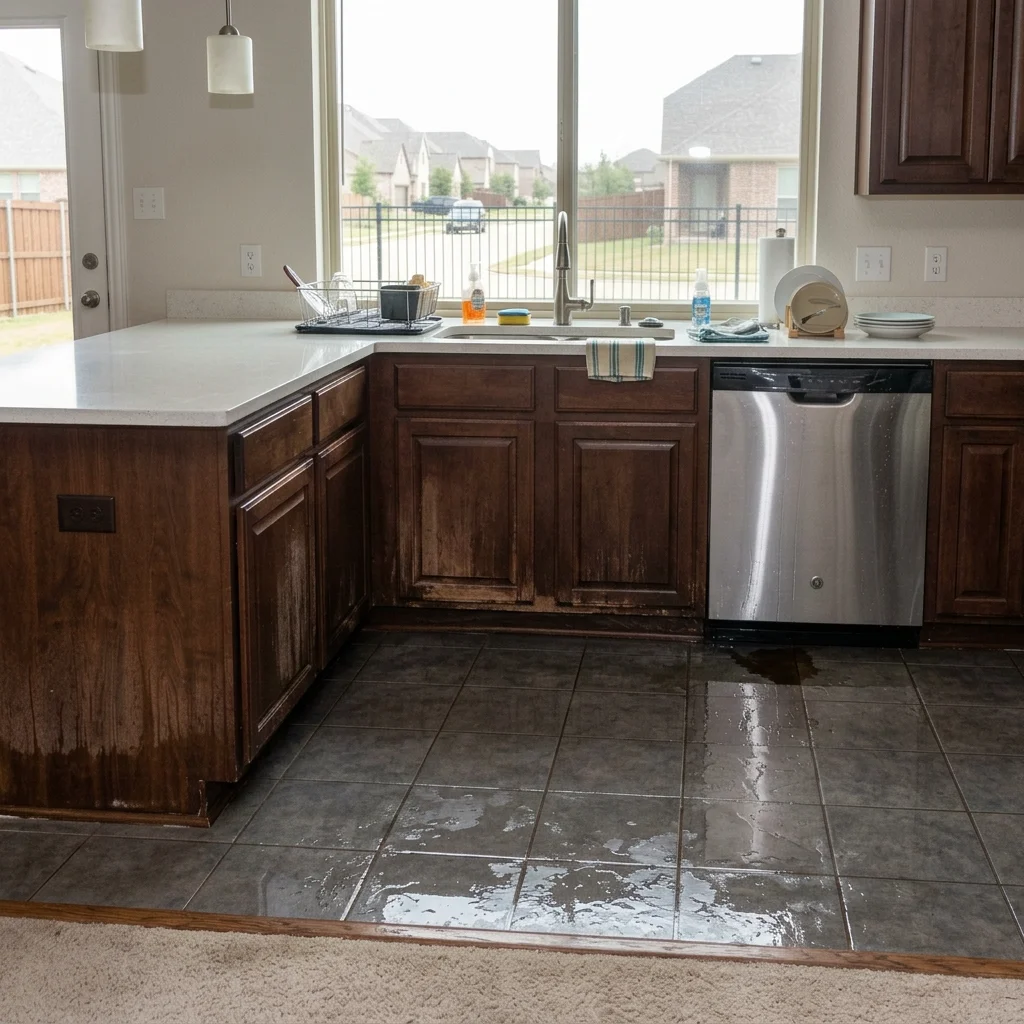
Stop the cycle, turn off the dishwasher at the breaker, and close the water valve under the kitchen sink. Then soak up the standing water and take photos. Stopping the water is only half the job. Moisture often stays trapped under the cabinets and floor, so it needs to be dried out fully before mold or swelling starts.
Why Dishwasher Leaks Cause Hidden Damage
The easy case is a flooded kitchen floor. The harder case is a slow leak. A loose hose can drip a little with every cycle, and the water soaks into the cabinet base and the subfloor. Nothing looks wrong until the floor lifts or a musty smell shows up.
A dishwasher sits in a tight space between cabinets, and the flooring often runs under them. Water gets trapped there, so wiping the surface does not fix the problem. That is why we dry the whole area, not just what looks wet.
Signs of a hidden dishwasher leak:
- A musty or sour smell near the dishwasher
- Flooring that is cupping, buckling, or lifting
- A soft or swollen cabinet base
- Dark stains or peeling paint on the baseboard
- A higher water bill with no other reason
- Dampness under the sink or at the back of the unit
Not sure where the water is from? A sink line, a fridge line, or a pipe leak can look the same. We can check.
Common Causes of Dishwasher Leaks
Some leaks start small and stay hidden. Others fail all at once.
Loose or Cracked Supply Line
It may drip slowly for months, or burst without warning. This is the most common hidden leak.
Worn Door Gasket
A cracked rubber seal lets water seep out at the front of the door during a cycle.
Drain Hose Problem
A clogged or loose drain hose can push dirty water back into the sink or onto the floor.
Failed Pump or Tub Seal
Water collects in a puddle under the middle of the unit, often soaking the subfloor.
Our Dishwasher Leak Cleanup Process
We follow the same five steps on every job. Our process is built around the widely used IICRC S500 water damage restoration standard.
- 1Inspection & Moisture Check
We use moisture meters and thermal imaging to find water under the cabinets, behind the dishwasher, and below the floor.
- 2Water Removal
We take out standing water from the floor and any spaces we can reach, so less of it soaks in.
- 3Drying & Dehumidifying
Air movers and dehumidifiers pull moisture out of the floor, cabinets, and walls. We check readings until they are back to normal.
- 4Remove What Can’t Be Saved
Swollen cabinet bases, wet insulation, or damaged flooring sections are taken out so they do not cause mold later.
- 5Final Check & Repairs
We confirm the kitchen is dry, share photos and moisture records for your insurance claim, and plan any repairs.
How Water Affects Your Kitchen
Different materials react to water in different ways.
Hardwood & Laminate
Edges soak up water first. Damage shows up later as cupping, gaps, or lifting boards.
Cabinet Bases
Particleboard swells and weakens when wet and often has to be replaced.
Drywall Behind the Unit
The bottom of the wall can hold water inside a closed cavity, where mold can begin.
Subfloor
Water usually travels here first, so it can be wet before the surface shows any damage.
What To Do While You Wait
A few safe steps can limit the damage until our team gets there.
Do
- Stop the cycle and turn off the dishwasher at the breaker.
- Close the water valve under the kitchen sink.
- Soak up standing water with towels or a wet vacuum.
- Empty the cabinets next to and under the sink.
- Take photos of the floor, cabinets, and dishwasher.
Don’t
- Do not stand in water while touching the controls or outlets.
- Do not keep running the dishwasher to see if it leaks again.
- Do not just wipe the floor and assume it is dry.
- Do not use a regular vacuum on wet floors.
- Do not wait days before getting help.
Why Choose Our Frisco Water Damage Team?
A wet kitchen is stressful. We keep it simple. We tell you what we found, what we plan to do, and how we will know the job is done.
We go by moisture readings, not by guesses or a set number of days. A floor that looks dry on top can still be wet underneath.
Our team focuses on:
- Local service in Frisco
- Moisture readings, not guesses
- Drying under cabinets and floors
- Plain-language updates during the job
- Photos and records for your insurance claim
- Repairs handled after drying, if you need them
We dry first and repair second, and only replace what truly needs it.
How To Prevent a Dishwasher Leak
Most dishwasher leaks give small warnings first. A quick check every few months can catch them early.
If your supply line is old, consider replacing it with a braided stainless steel line. It costs little compared to a flooded kitchen.
Simple prevention tips:
- Look under the sink for damp spots every few months
- Check behind the bottom panel of the dishwasher
- Replace the supply line every few years
- Check the door gasket for cracks or buildup
- Use the right amount of detergent
- Add a small leak sensor in the cabinet
Other Services You May Need
A dishwasher leak often needs these services too.
- Appliance Leak CleanupOther appliance leaks in your home.
- Water ExtractionFast removal of standing water.
- Moisture DetectionFind hidden wet spots.
- Hardwood Floor DryingSave wood floors when possible.
- Water Damage RepairRebuild after your kitchen is dry.
- Mold RemediationSafe removal if mold has started.
Frequently Asked Questions About Dishwasher Leak Water Damage
What should I do if my dishwasher is leaking?
Stop the cycle, turn off the dishwasher at the breaker, and close the water valve under the sink. Soak up standing water, empty the nearby cabinet, and take photos before you clean up.
How do I know if my dishwasher has a hidden leak?
Look for a musty smell, a soft or swollen cabinet base, warped flooring near the dishwasher, stains on the baseboard, and a water bill that rises for no clear reason.
Can a dishwasher leak damage the subfloor?
Yes. Water usually travels under the cabinets and flooring first, so the subfloor can be wet before any damage shows on the surface.
Can wet kitchen flooring be saved?
Sometimes. It depends on the material and how long it stayed wet. Fast drying gives hardwood and laminate the best chance. Moisture readings tell us if a floor can be saved or needs to be replaced.
Does homeowners insurance cover dishwasher leaks?
It depends on your policy and how the leak happened. A sudden burst is often treated differently from a slow leak. The dishwasher itself is usually not covered, but damage to floors, cabinets, and walls may be. Check with your insurance provider. We take photos and keep moisture records to support your claim.
Can a dishwasher leak cause mold?
Yes. Water trapped under cabinets or behind the unit stays wet for a long time, and mold can start in 24 to 48 hours, according to the EPA. Fast drying is the best way to prevent it.
How long does it take to dry a kitchen after a leak?
Water removal can often be done in a few hours. Drying usually takes several days, depending on how wet the materials are. We go by moisture readings instead of a fixed number of days.
What equipment do you use after a dishwasher leak?
We may use different equipment depending on the job, including:
- Moisture meters
- Thermal imaging cameras
- Wet vacuums
- Air movers
- Dehumidifiers
Each tool has a job, from finding hidden water to proving that everything is dry.
Dishwasher Leaking in Your Frisco Home?
Stop the water, then call our team. We will find where it went and dry your kitchen before it causes more damage.