
Window & Door Leaks Water Damage Cleanup in Frisco, TX
Rain that gets in around a window or door can soak walls, floors, and trim. We remove the water, dry your home, and check for moisture you cannot see.
- Local team in Frisco
- 24/7 emergency line
- Wall, trim, and floor drying
- Help with insurance records
Response
What Should I Do If Water Is Coming In Around a Window or Door?
Soak up standing water, move furniture and belongings away from the wall, and take photos. If water is near outlets or light fixtures, stay clear and turn off power to that area if you can do it safely. A window or door company or roofer fixes the leak. We remove the water and dry the wall and floor so mold does not set in while you wait for the repair.
Why Window and Door Leaks Cause Hidden Damage
A drip on the sill is easy to wipe up. The harder problem is where the water goes next. It can run down inside the wall, soak the insulation, and reach the baseboard and floor below without much warning.
Windows and doors are weak spots in any wall. During a hard Texas storm, wind can push rain sideways into small gaps. The water may only show up as a stain, a soft spot, or peeling paint days later.
Common signs of a window or door leak:
- Water on the sill or floor after rain
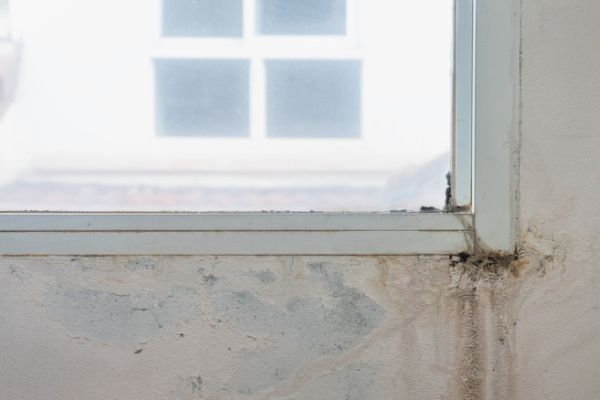
- Stains or bubbling paint around the frame
- Soft or swollen trim and baseboards
- A musty smell near the window or door
- Warped or stained flooring below
- Drafts with condensation between panes
If water reaches a light fixture or outlet, stay away and call an electrician.
How Does Water Get In?
Knowing the entry point helps the repair contractor fix it. It also helps you describe the problem when you call.
Worn Sealant or Caulk
Caulk cracks and shrinks with sun and heat. Gaps around the frame let wind-driven rain slip in.
Missing or Failed Flashing
Flashing is the thin barrier above and around a frame. If it is missing or damaged, water can run behind the wall.
Worn Weatherstripping
Door seals and thresholds wear out. Water can pass under or around a door during heavy rain.
Frame or Glass Damage
Rot, cracks, and failed seals in the frame or glass can leak even when the caulk looks fine.
Not sure where the water is going? Our moisture detection page explains how we track hidden wet areas.
Our Window and Door Leak Cleanup Process
We follow the same five steps on every job. Our process is built around the widely used IICRC S500 water damage restoration standard.
- 1Inspection & Moisture Check
We use moisture meters and thermal imaging to see how far water has spread into the wall, trim, and floor.
- 2Water Removal
Wet vacuums remove standing water so less of it soaks into flooring and drywall.
- 3Drying & Dehumidifying
Air movers and dehumidifiers pull moisture out of the wall and floor. We keep checking readings until they are back to normal.
- 4Remove What Can’t Be Saved
Wet insulation, soaked baseboards, and drywall that cannot dry safely are removed, then surfaces are cleaned.
- 5Final Check & Repairs
We confirm everything is dry, share photos and moisture records for your insurance claim, and plan any repairs.
What Gets Damaged Around Windows and Doors
The damage depends on the type of opening and what is next to it.
Windows
Water drips down the wall below the sill. Drywall, insulation, and window trim soak it up, and stains may show far from the window.
Exterior Doors
Water runs under the threshold into carpet, tile, or wood floors. Wet padding and subfloor can stay damp for a long time.
Sliding Glass and Garage Doors
Tracks fill with water and can overflow into the room. Garage doors can let water soak the slab edge and the shared wall.
For the damage inside, see our drywall water damage repair, carpet water damage cleanup, and hardwood floor drying pages.
Mold After a Window or Door Leak
Damp drywall, wood trim, and insulation can start growing mold within 24 to 48 hours, according to the EPA. Water inside the wall below a window can stay wet for a long time because air barely reaches it.
Window leaks often repeat with each rain, so materials may never fully dry between storms. That is why drying and fixing the leak both matter. If mold has already started, see our mold remediation page.
Warning signs to watch for:
- A musty smell near a window or door
- Dark spots on the wall, sill, or trim
- Peeling paint or bubbling wall surfaces
- Soft or swollen window trim
- Warped baseboards or flooring
- A stain that returns after every rain
What To Do While You Wait
A few safe steps can limit the damage until our team gets there.
Do
- Wipe up standing water with towels.
- Move furniture, rugs, and belongings away from the wall.
- Place towels or a tarp to catch more water during rain.
- Open nearby doors to let air move once the rain stops.
- Take photos of the leak, the stains, and any damaged items.
Don’t
- Do not touch outlets, switches, or light fixtures near the water.
- Do not seal the leak with caulk while the wall is wet.
- Do not paint over a stain while the wall is still wet.
- Do not use a regular vacuum on wet floors.
- Do not wait to see if it dries on its own.
Why Choose Our Frisco Water Damage Team?
A leak that keeps coming back is frustrating. We keep things simple. We tell you what we found, what we plan to do, and how we will know the job is done.
A window or door company, roofer, or builder fixes the opening itself. We remove the water and dry the structure, and we are happy to work around their schedule. We go by moisture readings, not guesses.
Our team focuses on:
- Local service in Frisco
- Moisture readings, not guesses
- Drying walls, trim, and floors
- Plain-language updates during the job
- Photos and records for your insurance claim
- Repairs handled after drying, if you need them
We dry first and repair second, and only replace what truly needs it.
How To Prevent the Next Window or Door Leak
Most leaks start small. A quick look at your windows and doors twice a year, before spring storms and after summer heat, can catch problems early.
If you see gaps, cracked caulk, or worn seals, have them fixed before the next heavy rain. Repairing a seal costs far less than drying and rebuilding a wall.
Simple prevention tips:
- Check caulk around frames and replace it when cracked
- Replace worn weatherstripping and door sweeps
- Clear window tracks and weep holes of dirt
- Make sure gutters send water away from walls
- Look for stains after each big storm
- Have a pro check flashing if leaks come back
Other Services You May Need
A window or door leak often needs these services too.
Frequently Asked Questions About Window and Door Leaks
What should I do first if water is coming in around a window or door?
Wipe up standing water, move belongings away from the wall, and take photos. Stay clear of outlets and light fixtures near the water. Then call us to remove the water and check how far it spread.
Should I call a window company or a water damage company first?
You usually need both. A window or door company, roofer, or builder fixes the leak. We remove the water and dry the wall and floor. Drying should not wait for the repair, because water can keep soaking in.
Does homeowners insurance cover window and door leaks?
It depends on your policy and the cause. Damage from a sudden storm is often treated differently from a slow leak caused by worn seals. Fixing the window or door itself may not be covered. Check with your insurance provider. We take photos and keep moisture records to support your claim.
Can a window leak cause mold inside the wall?
Yes. Mold can start on damp drywall, wood, and insulation in 24 to 48 hours if the materials stay wet. A leak that repeats with each rain makes this more likely.
Why does my window only leak when it rains hard?
Wind-driven rain pushes water sideways into small gaps that stay dry in light rain. Worn caulk, failed flashing, or a loose frame can all cause this. A window or door pro can find the exact entry point.
How long does it take to dry after a window or door leak?
Water removal can often be done in a few hours. Drying usually takes several days, depending on how wet the materials are. We go by moisture readings instead of a fixed number of days.
Can wet carpet or flooring be saved?
Sometimes. It depends on the material and how long it stayed wet. Carpet padding often needs to be replaced, while hardwood and laminate have a better chance if dried fast. Moisture readings tell us what can be saved.
What equipment do you use after a window or door leak?
We may use different equipment depending on the job, including:
- Moisture meters
- Thermal imaging cameras
- Wet vacuums
- Air movers
- Dehumidifiers
Each tool has a job, from finding hidden water to proving that everything is dry.
Window or Door Leaking in Your Frisco Home?
Call our team. We will remove the water and dry your home before the damage spreads.